

Cyprus Accounting & Tax Guides — VAT, Payroll, Year-End

How to correct a VAT return in Cyprus
Found a missing invoice or wrong VAT treatment after filing? Trace the error, prepare a Cyprus VAT amendment and reconcile the corrected return in Tax For All.

Cyprus's 50% employment exemption: check eligibility before setting your salary
Understand the Cyprus 50% employment-income exemption, the salary threshold, residence history and evidence needed before applying the relief through payroll.

Capital allowances in Cyprus: turn equipment records into the right tax deduction
How Cyprus capital allowances differ from depreciation, which asset records a company needs and how purchases, private use and disposals affect the tax calculation.

Cyprus UBO register: registration, annual confirmation and changes
Understand Cyprus UBO registration, the annual confirmation window, ownership changes and filing evidence. See how Sumly can help with the process.

VAT bad-debt relief in Cyprus: what to check when a customer never pays
Check Cyprus VAT bad-debt relief conditions, write-off records, partial payments and the claim process before recovering VAT on an unpaid customer invoice.

Director and shareholder loans in Cyprus: money into and out of your company
Understand director-loan accounts in Cyprus, distinguish owner funding from withdrawals, record repayments and check the tax issues before moving money.

Employee or contractor in Cyprus? Check the working relationship before you hire
Assess a Cyprus employee-versus-contractor arrangement using the actual working conditions, then set up payroll or supplier bookkeeping with the right records.

How to get an EORI number in Cyprus before your first shipment
Prepare a Cyprus EORI application with form C.1000, company records and representative authorisation, then connect customs documents to your bookkeeping.

Intrastat in Cyprus: 2026 thresholds and the goods records behind each report
Check the 2026 Cyprus Intrastat thresholds for arrivals and dispatches, track when reporting starts and prepare goods data separately from VAT and VIES.
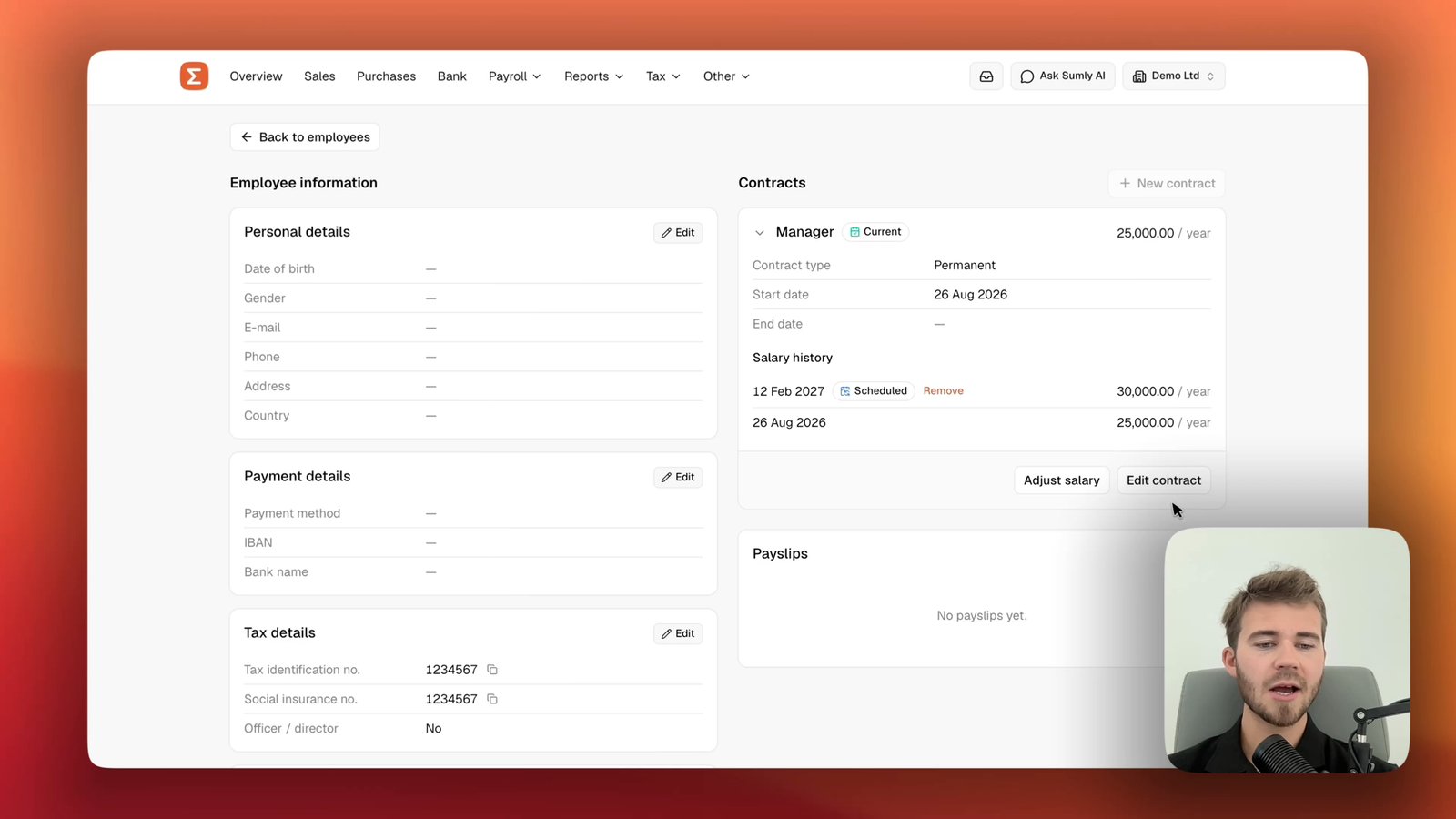
TD59 in Cyprus: the employee declaration behind your PAYE
What Cyprus TD59 is, where to find the current English form, what employees give their employer and how to check the information before payroll.
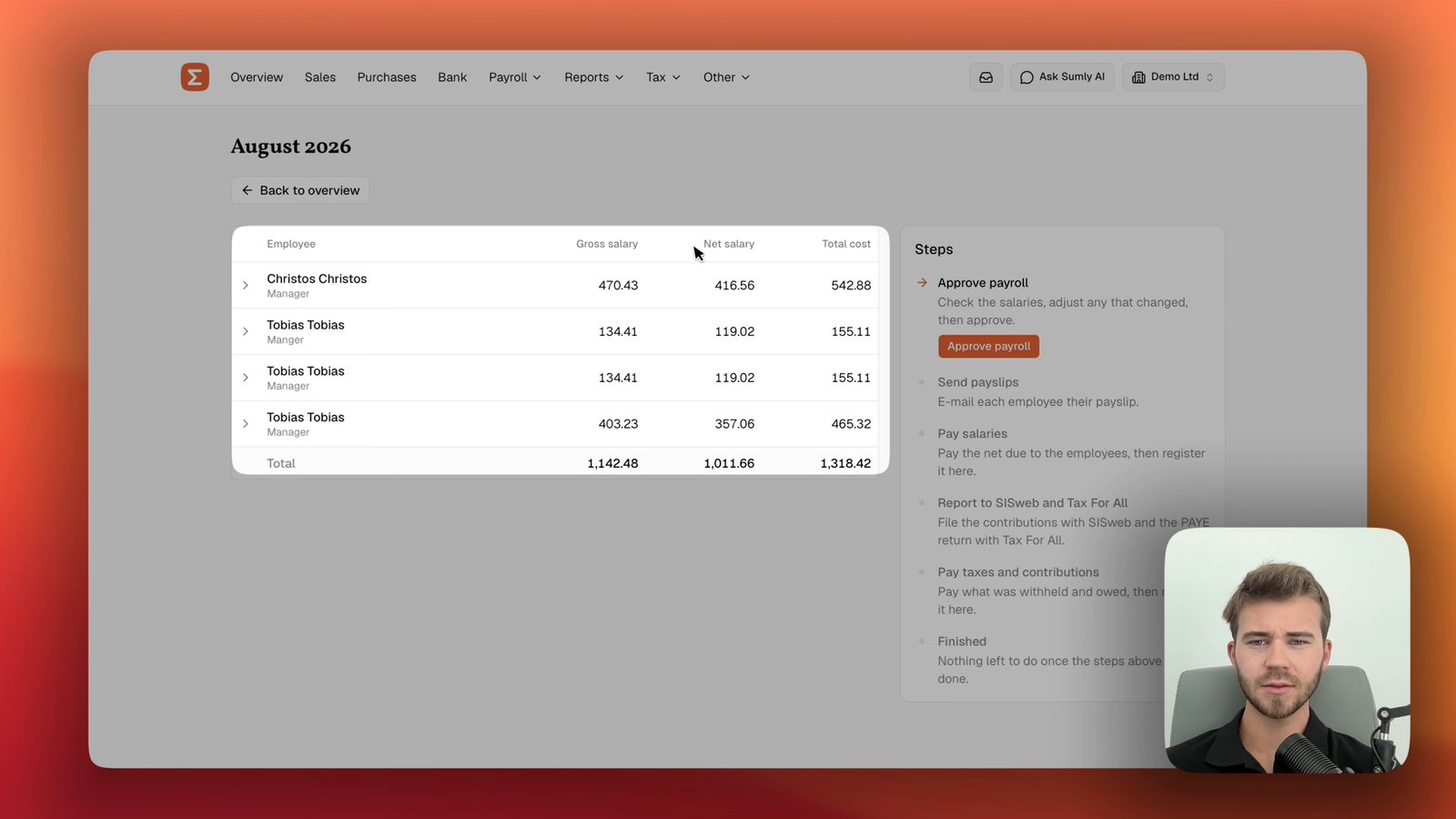
TD7 employer returns in Cyprus: monthly and annual filing through Tax For All
Prepare Cyprus TD7 employer returns from payroll, reconcile the annual totals, resolve errors and keep proof of filing and payment through Tax For All.

VAT deregistration in Cyprus: the application, final return and remaining records
When a Cyprus business can request VAT deregistration, which forms to prepare and how to handle pending returns, remaining assets and the final VAT position.
The HE32 annual return in Cyprus: deadline, fee, penalties and strike-off risk
When the HE32 is due, what it costs, the financial statements that go with it, the late penalty of €50 plus €1 a day capped at €150, and how strike-off happens.

Multi-currency bookkeeping for a Cyprus company: rates, VAT and bank accounts
How a Cyprus company keeps euro books while invoicing in dollars or pounds: which exchange rate to use, realised differences, and showing VAT in euro.

How to open a business bank account in Cyprus (banks vs Revolut/Wise)
What Cyprus banks ask for, how long onboarding really takes, how non-resident directors are treated, and where Revolut Business and Wise fit.
How to close a Cyprus company: strike-off, liquidation and what has to be clean first
How to close a Cyprus company: strike-off with form HE60, voluntary liquidation, the filings and tax position that must be clean first, and when dormancy wins.

The Cyprus 60-day rule: tax residency in two months
How the Cyprus 60-day rule works in 2026: the four conditions, how days are counted, and how residency is proved. Sumly files residency and non-dom for €750.

Cyprus accounting records requirements: what a company must keep, and for how long
Which records a Cyprus company must keep, the six-year retention rule that applies from 2026, the four-month write-up deadline, and how digital records work.

Audit requirements in Cyprus: which companies need one and when
Every Cyprus company's accounts are signed off by a licensed statutory auditor. The 2026 thresholds and deadlines — and you can order one in Sumly from €950.

Bank reconciliation for a Cyprus company: the monthly routine that makes the books trustworthy
What bank reconciliation means for a Cyprus company, the monthly routine, the five usual mismatches, and how open-banking feeds do most of the work.

Cyprus company formation cost: the official fees, and what a provider adds on top
Registering a Cyprus company costs €175 in government fees, €295 expedited. The full 2026 Registrar table, and what providers add. Sumly does it all for €950.
Documents and requirements to register a Cyprus company
Approved name, memorandum and articles, director and shareholder ID, a registered office and the filing itself. Sumly prepares and files the lot for €950.

Company secretary in Cyprus: is one required, who can act, and what they do
Every Cyprus company must have a secretary under Cap. 113. Who can hold the office, the sole-director rule, and the registers and HE32 filings the role covers.
Cyprus company year-end checklist: closing the books, the audit and every filing
Close the books, revise provisional tax by 31 December, then financial statements, audit, AGM, HE32 and TD4 in order. Or a Sumly bookkeeper runs it, €190/month.

Corporate tax in Cyprus: rate, deadlines and how it really works
Cyprus corporate tax is 15% from tax year 2026, 12.5% through 2025. When the TD4 return and both provisional installments are due, and what the reform changed.

Director duties in Cyprus: who can be a director and where the liability sits
Who can direct a Cyprus limited company, what the duties ask of you, the filings you answer for, and where personal liability starts under the 2026 rules.

Cyprus Holding Company: Benefits, Setup & Rules
What a Cyprus holding company pays in 2026: the participation exemption, 5% SDC after the reform, GeSY for non-doms and substance. Sumly forms one for €950.
Cyprus invoice requirements: what a VAT invoice must include
Every mandatory field on a Cyprus VAT invoice, plus the 30-day issue deadline, the €85 simplified invoice limit, reverse-charge wording and record keeping.

Cyprus non-dom status explained: dividends, SDC and the 17-year rule
Cyprus non-dom exempts dividends, interest and rent from SDC for up to 17 years. What it covers, what GeSY costs — and Sumly files the application for €750.

Self-employed tax in Cyprus: income tax, Social Insurance, GeSY and VAT
What a Cyprus sole trader pays in 2026: income tax bands, 16.6% Social Insurance, the 0.5% HRDA levy, 4% GeSY, VAT from €15,600. Sumly registers you for €200.

Share capital for a Cyprus company: minimums, norms, and what to choose
Cyprus has no minimum share capital for a private limited company. What authorised and issued capital mean, what founders typically choose, and what it costs.
Cyprus tax benefits for foreigners: the full founder's picture
Non-dom status, 60-day residency, the 50% first-employment exemption, 15% corporate tax and the 3% IP Box: what each is worth to a foreign founder in 2026.

Cyprus tax deadlines 2026: the complete calendar
Every deadline a Cyprus limited company must hit in 2026: VAT, VIES, provisional tax, the TD4, the HE32 and employer filings, with the cost of missing each one.

Cyprus taxes for software companies: IP Box and the founder stack
What a Cyprus software company pays in 2026: 15% corporate tax, a 3% effective rate on qualifying IP Box profit, and VAT and VIES on cross-border sales.

Cyprus tax identification code (TIC): registering a new company with the Tax Department
Every Cyprus company must register with the Tax Department within 60 days of incorporation. How TIC registration works on Tax For All and what filings follow.

Cyprus VAT rates 2026: which rate applies to what
Cyprus charges VAT at 19%, 9%, 5%, 3% and 0%. What sits in each band in 2026, which goods are temporarily zero-rated, and what to put on an EU invoice.

Cyprus VAT refund: how a company claims input VAT back
A repayment VAT return is itself the refund claim, filed through Tax For All. What evidence is asked for, when interest runs, and what delays a claim.

Cyprus vs Bulgaria for founders: two low-tax EU routes compared
Bulgaria charges 10% to Cyprus's 15%, yet non-dom dividends and the 3% IP Box can make Cyprus cheaper. Both chains compared — Sumly forms either for €950.

Cyprus vs Dubai for founders: EU base or Gulf base?
The UAE taxes profit at 9% above AED 375,000; Cyprus charges 15% inside the EU single market. How the two compare for founders — and what Cyprus costs: €950.

Cyprus vs Estonia (e-Residency) for founders
Estonia charges 22% when profit is distributed. Cyprus charges 15% as it is earned, then a non-dom pays no SDC on dividends. How to choose — formation €950.

Cyprus vs Greece for a company: tax, payroll, language and bureaucracy compared
Cyprus charges 15% to Greece's 22%, taxes dividends more lightly, and runs administration in Greek and English. The full comparison — and formation from €950.

Cyprus vs Ireland for founders: tax, IP regimes, substance and cost
Ireland taxes trading profit at 12.5%, Cyprus a flat 15% with a 3% IP Box and low-tax dividends. Where each wins, with 2026 figures. Cyprus formation from €950.

Cyprus vs Malta for founders: taxes, costs, and real-world friction
Cyprus charges a flat 15%. Malta charges 35% and refunds most of it after a dividend. What each system asks of you — and Sumly forms the Cyprus side for €950.

Cyprus vs Portugal for founders and remote workers: tax, residency, and real life
Cyprus non-dom against Portugal's IFICI, 15% against 19%, 60 days against 183 to residency: the real numbers for 2026. Sumly forms the Cyprus company for €950.

Cyprus vs UK company: what a UK founder gains, loses and must watch
Cyprus limited against UK Ltd: corporate tax, EU VAT access, dividend taxes, residence tests, audit and banking, with 2026 figures. Cyprus formation from €950.

Dormant company in Cyprus: what you still have to file when you are not trading
A dormant Cyprus company still files the HE32, financial statements and a nil tax return every year. What each costs, and when strike-off is the better call.

The first year of a Cyprus company: what to do, month by month
A month-by-month map of year one: tax registration, the VAT test, your first hire, provisional tax, then audit, HE32 and TD4. Sumly runs it from €39/month.

GeSY contributions in Cyprus: every rate, who pays it, and when
Every GeSY rate for 2026: 2.65% employee, 2.90% employer, 4% self-employed, 2.65% on dividends, the €180,000 cap, and when each contribution is paid.

GHS (GeSY) for Cyprus company owners: what you pay on salary and dividends
What GeSY costs a Cyprus company owner in 2026: 2.65% plus an employer 2.90% on salary, 2.65% on dividends, one €180,000 cap, and no non-dom exemption.
Hiring your first employee in Cyprus: the complete employer checklist
Registering as an employer, the ERGANI notification, 2026 rates and minimum wage, monthly deadlines and payslips. Sumly runs the payroll and books it, from €39.

How to choose accounting software for a Cyprus company
Five checks that separate accounting software for a Cyprus company: VAT boxes, native VIES, the filing calendar, bank feeds, a clean exit. Try Sumly free.

How to claim the Cyprus IP Box: process, nexus calculation, records
Which assets qualify, how the nexus fraction works, the records to keep per asset, and how the 80% deduction lands on the return. Sumly applies and keeps them.
How to file a VAT return in Cyprus (Tax For All, step by step)
Cyprus VAT returns go through Tax For All, due by the 10th of the second month after the quarter. Deadlines, payment, penalties — or Sumly prepares it.

Move Your Business to Cyprus: Founder's Guide (2026)
Almost every founder moves by forming a new Cyprus limited company rather than redomiciling. The steps, the residency side, the old entity. Formation €950 flat.

Nominee directors in Cyprus: what they are, when they're used, and the risks
What a nominee director does, the duties and liability the office carries, why it cannot hide ownership, and how the 2026 reform changed the case for one.

Provisional tax in Cyprus: the two installments, explained
Cyprus provisional tax is paid in two installments, 31 July and 31 December. How to set the estimate, when to revise it, and how the 10% surcharge works.

Reverse charge VAT in Cyprus: when it applies and how to book it
When a Cyprus company must charge itself VAT on services bought from abroad and on EU goods, how the entries go into the return, and what skipping them costs.
Salary vs dividends in Cyprus: how to pay yourself from your company
What a salary costs against a dividend in 2026: 15% corporate tax, 5% SDC, GeSY and Social Insurance, with worked euro examples. Sumly runs both from €39/month.

Self-employed or limited company in Cyprus: which should you choose?
How each is taxed, what each files yearly, and the profit level where incorporating pays. Sumly registers either — €200 self-employed, €950 a company.

Shelf company vs new company in Cyprus: which is faster and cheaper?
A shelf company is a pre-registered dormant Cyprus company. The transfer filings, fees and checks against a fresh incorporation — which Sumly does for €950.

Social insurance rates in Cyprus 2026: employer, employee, self-employed
Cyprus Social Insurance in 2026: 8.8% each for employee and employer, 16.6% self-employed, the employer-only funds, the €68,904 ceiling and payment deadlines.

Tax-deductible expenses for a Cyprus company: what counts, what doesn't, and the proof you need
The wholly-and-exclusively test that decides what a Cyprus company can deduct, the disallowed list, the entertainment cap, and the proof you need.

VAT on digital services from Cyprus: B2B, B2C and the One Stop Shop
How a Cyprus company charges VAT on digital services: reverse charge for EU businesses, the €10,000 threshold and One Stop Shop for consumers, and non-EU sales.

VAT registration in Cyprus: threshold and how to register
When a Cyprus company must register: the €15,600 rolling threshold, the 30-day test, registering through Tax For All, and what changes after. Sumly does both.

What happens after company registration in Cyprus
Tax registration through TFA, the VAT threshold test, bookkeeping, provisional tax, the HE32 and the audit. Sumly does the lot from €39/month, books included.

The Yellow Slip in Cyprus, explained: who needs it and how to apply
The Yellow Slip is Cyprus's registration certificate for EU citizens, form MEU1. Apply within four months of arrival, fee €20 — or Sumly files it for €400.

The Cyprus tax reform 2026, explained: what changed and what it means for your company
Every change in the 2026 Cyprus tax reform: the 15% corporate rate, the 5% dividend SDC and its transitional trap, deemed distributions and stamp duty gone.

How to register a company in Cyprus: every step, from name approval to a live company
Name approval, the HE1 filing and fees, who signs what, and what follows the certificate. Or Sumly does all of it for €950, 100% approval guaranteed.

Pre-establishment expenses in Cyprus: claiming costs from before your company existed
How a new Cyprus company deducts costs paid before incorporation: the wholly and exclusively test, the separate VAT reclaim windows, and how to book it all.

Do I need an accountant for my Cyprus limited company?
What Cyprus law actually requires, what an accountant does day to day, and what software can carry. Run it yourself on Sumly from €39/month, or hand it over.
VIES submissions in Cyprus: what, when and how to file
Cyprus VIES statements are monthly, filed only through Tax For All, due by the 15th. Who files, nil returns, penalties — or Sumly prepares it from your books.

Cyprus IP Box explained: the 80% deduction and the 3% effective rate
How the Cyprus IP Box works in 2026: the 80% deduction, the 3% effective rate, which assets qualify and the nexus fraction. Sumly applies for it and tracks it.

How VAT works for Cyprus freelancers
When a Cyprus freelancer must register for VAT, the €15,600 threshold, what to charge Cyprus, EU and non-EU clients, and how the quarterly return works.